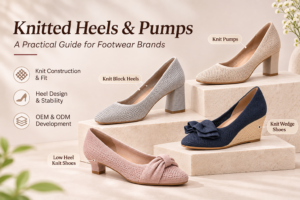









Knitted uppers are no longer limited to casual flats and slip-on shoes. Today, women’s footwear brands can incorporate knitted materials into pumps, block heels, wedges and other elevated silhouettes.
For OEM and ODM buyers, however, developing knitted heels requires a different approach from manufacturing flat knitted shoes.
Heel geometry, upper support, fit and construction methods must work together. A visually appealing knitted pump is only the starting point; the finished product also needs to meet its intended use and quality requirements.
Understanding these development considerations can help footwear brands make more informed decisions when planning a knitted heels collection.
Why Knitted Heels Require Special Development Attention
A knitted upper introduces flexibility and surface texture into a shoe that also contains relatively structured components.
In a flat shoe, the relationship between the upper and outsole is generally different from that of an elevated heel. When heel height changes, the shoe’s geometry, foot positioning and load distribution also change.
This creates several development priorities:
- Upper structure: The knit must be compatible with the intended shoe shape.
- Heel stability: Heel geometry and attachment need to suit the footwear design.
- Fit: The upper opening, heel counter and forefoot should be evaluated together.
- Outsole construction: Sole materials and assembly methods must support the finished design.
- Appearance consistency: The shoe should maintain the approved silhouette across different sizes.
These considerations apply whether a brand is developing a minimalist knitted pump or a fashion-focused heel with decorative details.
Selecting the Right Heel Structure for Your Collection
The heel profile helps determine how a knitted shoe looks, how it is constructed and where it fits within a retail assortment.
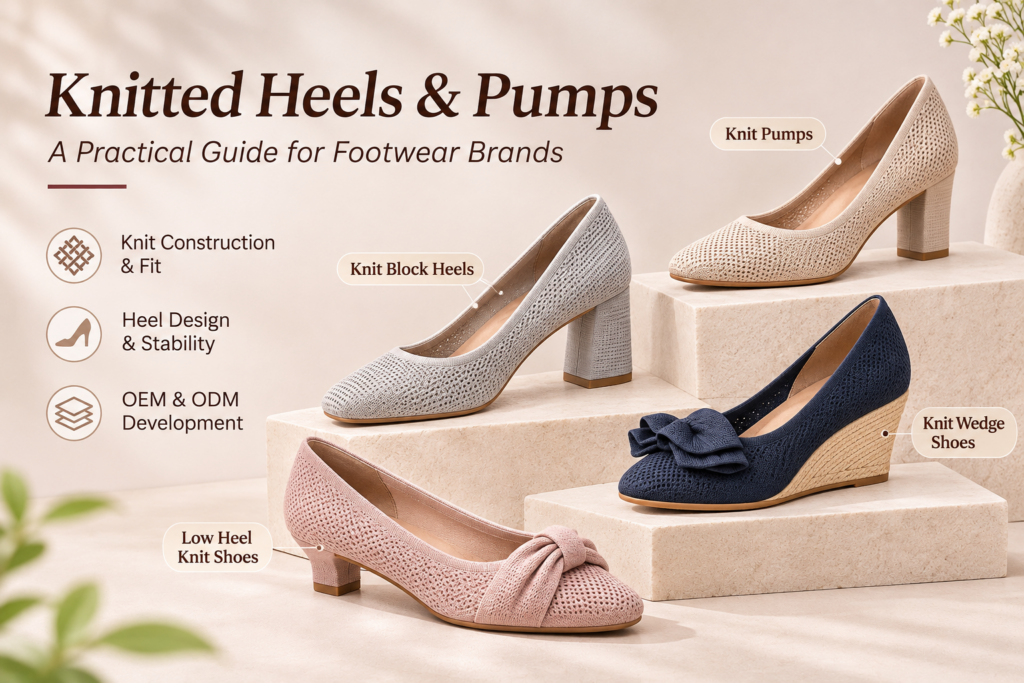
Knit Pumps: Refined Styling for Office and Fashion Collections
Women’s knit pumps combine a recognizable pump silhouette with knitted upper construction.
The knit texture can add visual depth to an otherwise simple design, allowing brands to explore different surface patterns, colors and finishes.
Shuyi’s women’s knit pumps with a textured knitted upper provide an example of this design direction.
Such styles may suit office-inspired collections, business-casual footwear ranges and fashion-oriented private-label programs.
When developing knitted pumps, buyers should pay particular attention to toe shape, upper tension, heel height and the fit around the shoe opening.
A knitted upper should not be assumed to deliver the same fit as a conventional synthetic or leather pump.
Knit Block Heels: Structured Silhouettes with Modern Appeal
Block heels are a popular design direction for brands looking for an elevated profile with a relatively broad heel base.
Their appearance can range from minimalist office footwear to more fashion-oriented styles.
For example, Shuyi’s women’s knit block heels with a square toe combine a clean knitted upper with a structured block heel.
For OEM development, important details include:
- Heel shape and attachment
- Toe box geometry
- Upper construction and shape retention
- Outsole compatibility
- Fit consistency across sizes
A wider heel base may offer a different wearing experience from a narrow heel, but actual stability and comfort still depend on the complete shoe design.
Knit Wedge Shoes: A Different Approach to Heel Elevation
Wedge construction differs from conventional separated heel profiles.
Instead of relying on a distinct heel element alone, the sole structure provides a more continuous elevated shape.
This can create a softer, casual appearance suitable for lifestyle and everyday women’s footwear collections.
Shuyi’s women’s knit wedge shoes with a bow detail illustrate how knitted materials, decorative elements and a low wedge profile can be incorporated into one design.
When evaluating wedge shoes, buyers should consider the sole’s profile, weight, flexibility, material and compatibility with the knitted upper.
Decorative details should also be reviewed during sampling to ensure consistent placement and finishing.
Low Heel Knit Shoes: Subtle Elevation for Everyday Styles
Not every women’s footwear collection requires a prominent heel.
Low heel knitted shoes provide an alternative direction for brands seeking a more understated silhouette.
Design details can make these styles distinctive without requiring complicated heel constructions.
For example, Shuyi’s women’s low heel knit shoes with a decorative knot show how a knitted upper and subtle decorative feature can support an everyday footwear concept.
Low heel styles may be considered for commuting, casual office and lifestyle collections.
Nevertheless, fit, heel construction and outsole performance still require proper evaluation.
The Relationship Between Knit Construction and Heel Height
One of the most important technical questions in knitted heel development is how the upper behaves when combined with an elevated sole.
Unlike rigid materials, knitted textiles can have different levels of stretch depending on yarn selection, knitting density and structural design.
The upper therefore needs to be assessed as part of the complete shoe.
Upper tension and shape
Too much flexibility in the wrong area may affect how the shoe holds its intended shape. Insufficient flexibility may create fitting difficulties.
Forefoot fit
Heel elevation changes the relationship between the foot and the forefoot area. Toe shape, upper structure and the internal shoe geometry should be reviewed during sample fitting.
Heel retention
The rear of the shoe should be evaluated for its ability to maintain an appropriate fit during normal movement.
Construction compatibility
Different heel designs may require different supporting components or assembly methods.
These are reasons why sample approval matters before confirming bulk production.
A Technical Checklist for OEM Knitted Heel Development
For footwear brands preparing a new knitted heels project, a structured product specification can reduce unnecessary development revisions.
| Development Item | What Buyers Should Confirm |
|---|---|
| Upper material | Fiber composition, knit texture and stretch requirements |
| Toe design | Pointed, rounded, square or other approved silhouette |
| Heel profile | Block, wedge, pump heel or low heel |
| Heel dimensions | Required height, width and shape |
| Fit | Size range, shoe opening and fitting expectations |
| Outsole | Material, construction and intended use |
| Branding | Insole logo, labels and packaging |
| Quality requirements | Appearance, workmanship and relevant testing needs |
Some specifications may change during sampling as the manufacturer evaluates technical feasibility.
For this reason, final production requirements should be confirmed against an approved sample, not only an initial design drawing.
Three Common Development Mistakes to Avoid
Mistake 1: Selecting the Upper Without Considering the Heel
A knitted pattern that works well on a flat shoe may not behave the same way when incorporated into a higher pump.
The upper and sole should be evaluated together.
Mistake 2: Assuming Knitted Material Automatically Means Greater Comfort
Knitted textiles may offer flexibility and breathability depending on their construction, but overall comfort also depends on fit, heel geometry, insole design and the finished shoe.
Brands should evaluate physical samples rather than relying solely on material descriptions.
Mistake 3: Approving Appearance Without Reviewing Production Consistency
A visually appealing sample does not eliminate the need for quality management.
Manufacturers should assess whether the approved design can be reproduced consistently during bulk production.
This includes upper appearance, decorative details, heel attachment and finished product inspection.
How Shuyi Supports OEM & ODM Knitted Heel Projects
Shuyi Footwear manufactures women’s knitted footwear for brands, importers and retailers, including pumps, block heels, wedges and low heel styles.
Product development can involve upper colors, knitting patterns, heel profiles, size ranges, branding and packaging, subject to the design and production requirements.
Buyers can begin by providing reference images, desired heel measurements, intended markets and estimated order quantities.
During sampling, attention should be given to the complete shoe rather than treating its knitted upper and heel as unrelated components.
Shuyi also incorporates incoming material inspection, in-process quality control and final product inspection into its manufacturing operations.
To explore available designs, visit the Knitted Heels & Pumps product collection.
You can also learn more about Shuyi’s footwear craftsmanship and manufacturing processes.
Choosing the Right Knitted Heel for Your Market
Before developing a new collection, brands should consider the role each design will play in their assortment.
A structured knitted pump may be appropriate for a refined office range. A block heel can introduce a different silhouette, while a low wedge or subtle heel may suit more casual product positioning.
The best development direction depends on the target customer, design requirements, manufacturing feasibility and approved sample performance.
For OEM and private-label projects, Shuyi Footwear can discuss suitable styles and customization options based on your intended collection.
Browse our women’s knitted heels and pumps or contact our team with your design references, preferred heel styles and estimated order quantities.